Showing posts with label children. Show all posts

Heading Back to School and College

If school isn't already back in session where you live, it's sure to be soon. I've still got a few more years until I need to worry about school supplies again, but I do know that when it comes time, I'll be looking for eco-friendly options—especially ones that work within my budget.

Photo via @parklandmfg

0

Photo Friday | Cleaner Laundry and Closet Organization


For last week's Photo Friday post, I shared one peek into Baby Girl's tiny wardrobe from my afternoon of sorting her clothing by size, and I can't help but share a couple more photos today!

We've been making a lot of progress over the past couple weeks in putting together the nursery as these weeks begin to really count down, and I'm excited to take some pictures soon and do a more comprehensive post on the room and the eco-friendly elements in it.

I'll also be sharing some of the eco-friendly items we've registered for and have received secondhand, along with sharing some photos from my upcoming shower.

As I've stated before, the majority of the clothing we have so far is secondhand, either from local stores or handed down to us from friends with girls of their own. As part of my nesting/Type A tendencies, I've been working to get all of our items organized, so that when the shower gets here, I'll be ready to organize the rest of Baby's gifts without feeling AS overwhelmed.


I've had more fun washing Baby's clothes than I ever do washing my own, and have all of her clothing so far washed and put away in the closet. (And let me say, I'm already fully aware I will never enjoy washing baby clothes as much as I do now, once I've got endless piles of dirty onesies in the laundry room!)


This is where I've got to give a shoutout to the perks of a helpful online community of mamas. Awhile back, I was researching eco-friendly baby clothes hangers, thinking I would easily find some made of recycled plastic. However, those don't seem to be a thing, although the most eco-friendly thing I could find was sturdy cardboard hangers. Not exactly what I had in mind, and our local secondhand shops also didn't have hangers for sale, which surprised me. So I took to Instagram stories to ask for advice on where I could find a hanger that worked for me.

My friend Stephanie with Lafayette Moms Blog messaged me to say she actually had a bag full of coral and pink baby clothes hangers that she was needing to get rid of. HOW perfect is that!?

A few weeks later, she dropped off the clothes hangers to me, and into the closet they went. Stephanie was able to clean out, and I was able to get a ton of reused hangers for free. Thanks again, Stephanie!


I mentioned last week that I'm using an eco-friendly baby-safe detergent on her clothes, blankets, towels and sheets. After doing some online research, I ended up choosing Charlie's Soap laundry powder, which I bought off Amazon. 

Baby detergents should ideally be chemical-free, fragrance-free, brightener-free and hypoallergenic. Because their skin is much more sensitive than ours, it's best to be as clean as possible in detergent ingredients. There are numerous detergents available that fit the bill, and I plan to try a few of them over the years of washing baby and toddler clothes.


I chose to start with Charlie's Soap because of the high reviews on both of the above lists, and from a friend's personal recommendation (thanks, Kari!). The soap is very highly recommended for washing cloth diapers in, which was the deciding factor for me.

From Parent Guide:
Free from sodium laureth sulfate (SLS) and other nasty ingredients, and cleans like it is the superhero that your laundry needs. No more looking at your baby's freshly washed clothes and wondering, "Why didn't that come out?"

From The Bump:
Charlie’s was originally formulated as an an industrial cleaner, so it really gets the poop out, and it removes any residue your previous detergent left behind on clothes—and the machine. Amazingly, it’s tough yet gentle, hitting all of the baby-friendly notes: It’s hypoallergenic, biodegradable, non-toxic and chemical- and paraben-free. Don’t be fooled by the scent—it is, in fact, fragrance-free, and baby’s clothes, sheets and towels will emerge from the washer completely odorless. And because it’s so concentrated, it’s a great value too.

The powder form is also concentrated and lasts a long time, making it a value over time. (Also, the powder comes with a measuring scoop...something I did not discover until my third load of baby laundry...)

Don't forget to visit me on Instagram for more behind-the-scenes of our nursery and baby preparations!

0

Why I'm Committed to Sustainability and the Environment

Happy Earth Month, y'all!

I'm excited about what I've got planned here on the blog during Earth Month, but I wanted to kick off by taking a step back to WHY protecting the environment is so important to me - and why I hope it would be important to everyone.


0

Eco-Friendly Easter Alternatives

It's an interesting year for holidays, with Valentine's Day coinciding with Ash Wednesday and Easter falling on April Fool's Day. I keep forgetting that Easter is actually only two weeks away. For us, Easter mostly consists of family gatherings, church and boiled crawfish. If I could even tell you how much I am looking forward to some crawfish...

If you've got younger children, your Easter probably consists of baskets, treats and dyeing eggs. All things I loved as a child!

It's not hard these days to make Easter activities a little more sustainable and eco-friendly, thanks to natural egg-dyeing methods and reusable gifts and decorating options.


0

Sustainable Holiday Shopping | Gift Guide for Children

It's time for the final gift guide this season - all for the babies and children in your life!

(Catch the guides for ladies and guys, in case you missed them.)

There are some great eco-friendly educational and fun gifts from ethical brands out there, and this guide aims to encompass a variety of gift types and age ranges.

http://www.ecocajun.com/2017/12/gift-guide-for-children.html
0

Photo Friday | Celebrating Recycling Successes

We can tend to be a little pessimistic in Acadiana about recycling services, especially with the change last year that we could no longer recycle glass. But we do have a lot to cheer about in terms of recycling progress!

Two dedicated Lafayette ladies/mothers took the initiative during the 2015/2016 school year to evaluate recycling programs and make the case for Lafayette Parish public schools to adopt recycling programs. I wrote about this campaign on the blog last summer, and contacted the school board members to express my support for teaching children about the importance of recycling. (As I always say, I learned at a young age and look where I am now.)


0

A Minimal Waste Easter

With Easter coming up this weekend, it's time to finalize the crawfish boil plans, egg hunts and Easter baskets for the children. In my home, we don't do much by way of decorations or gifts, so we're already pretty waste-free, but I still work to make the holiday eco-friendly.


I usually forget to put out an Easter basket for decoration until sometime around now, the beginning of Holy Week. But I do have a metal one in storage, complete with plastic eggs that are at least 10 years old, and a few tin eggs that used to hold candy. I don't bother with plastic or paper grass at all, which keeps the house much cleaner.


A few years ago, I got on a Pinterest kick and wanted to make wreaths for our front door, but in an eco-friendly way. I learned how to make those burlap wreaths, and I purchased fake fall flowers to intertwine in the burlap. When spring rolled around, I picked up some fake spring flowers and replaced them on the same burlap wreath. It's been two or three years now, and although my burlap is starting to look a little sad, the wreath itself still works and gives a little cheer to our front door.

I love being able to repurpose one wreath to last for nine months out of the year, especially when I'm on the third year of using the same wreath base. (The other three months, around the holidays, I have a red burlap wreath on the door.)

But maybe you do a bit more for Easter. Dyeing eggs is always fun, especially with children, and there are many natural alternatives for dye. In 2013 and 2015 I experimented with using spices and produce to dye batches of eggs, and although it took awhile, I loved the results.

Using food-based items combined with vinegar also means you're keeping synthetic ingredients and materials out of your eggs, which makes them healthier if you plan to actually eat the eggs (which you should!)


Get creative when dyeing your eggs and reuse materials that would otherwise be thrown away. I've used strips of recycled cardboard boxes as drying stands, and my friend Sloane uses water and soft drink bottle caps.

If you prefer not to get messy with dye, use decorative stickers or washi tape to get a unique look. 

When it comes to using plastic eggs filled with treats for hunts, look for secondhand plastic eggs (the ones I have at home are secondhand from my mother's former classroom), or choose some made of renewable plant-based plastic (these are from Eco Eggs.)

Photo via Eco Eggs

Skip the prepackaged Easter baskets at the store, because the baskets are meant for only one holiday, every item is wrapped, and the entire thing is wrapped in cellophane, which cannot be recycled.

Instead, make your own! Find baskets at a flea market or secondhand shop, or borrow some from friends or family. If you decide to purchase new baskets, choose ones that can be used for multiple purposes in your home throughout the year.

Customize your baskets for Easter with pastel ribbon or secondhand fabric as a liner, which can be removed once the holiday is over.

Make your own Easter basket grass with shredded paper or scrap fabric.

When it comes to filling baskets with treats, look for treats wrapped in foil or paper instead of plastic, or skip the candy altogether. Add a coloring book and nontoxic markers, outdoor toys like a jump rope or Frisbee, or even a child-size reusable water bottle.

You don't have to go overboard on material items for Easter, and you definitely don't have to go single-use. Minimize where you can and look for secondhand or reusable items for decorations and gifts.
0

Reducing Waste When Preparing Lunch

Typically, when I grocery shop, I try to cover the entire week - lunch and dinner for two, plus occasional breakfast foods and regular snacks. I enjoy cooking, so I usually try to cook enough dinner a few times a week so that leftovers can be eaten for lunch, but sometimes, I'll pick up dedicated lunch items for my husband and me.

Since I don't work terribly far from my office, many times I just head home for lunch to break up the day, and then I don't worry about packing my lunch each morning. The difficult part is when I haven't planned well enough, or something comes up in the day, and I'm stuck having to find food at the last minute - and that's when things get a little wasteful.

But, I'm here to help you pack a waste-free lunch, especially since our Project Front Yard challenge is TOMORROW!


If you're in an office, it's probably the easiest transition to make, but no matter what your situation is, there are a few items you'll need to arm yourself with:

  • Reusable containers
    • These can be either purchased food storage containers, or repurposed things like mason jars.
  • A real plate and/or bowl
  • Reusable utensils 
  • Cloth napkins
  • Reusable water bottle or cup for drink
  • Reusable straw (if you need a straw at all)
  • Cloth lunch bag 

Things to avoid:

  • Plastic water bottles
  • Plastic soft drink bottles
  • Styrofoam trays and containers
  • Frozen food trays
  • Paper napkins
  • Plastic utensils

When I started at my current job, I invested in a clearance plate and bowl from Target to keep at my desk, and I moved a few coffee mugs over from home. Combined with a dish towel and a fork and spoon, I'm covered for when I need to eat at work.

I've also recently added my collection of stainless steel straws, and the added bonus is that they make perfect reusable coffee stirrers!


It also helps if you have a sink available to wash your dishes, but if not, just close everything up and bring it home to wash.

If you're on the go, or not near a kitchen during lunchtime, you can still easily have a waste-free lunch, but you may want to adjust to pack foods that don't need to be reheated, or that require utensils.

You might be wondering, "What exactly are my food options?"
  • If you like to cook, divide and package your leftovers into smaller containers that you can quickly grab on your way out of the house.
    • I'm a fan of quinoa-based dishes, since we've cut most pasta out lately.
  • Sandwiches and wraps are simple to make and pack well in reusable containers.
  • Salads are a simple and healthy lunch - just pack the dressing separately. Get Pinteresty with it and pack your salad in a mason jar. (When it's lunchtime, add your dressing, put the lid back on, and shake.)
  • Prepare your own chicken, tuna or egg salad.
  • Leftover or frozen soup or gumbo is perfect on rainy days.
  • Check out Zero Waste Chef for some more lunch ideas.


When my company had food service available, I would bring my trusty bowl for salads and bring it back to my desk, in order to save on the plastic tray.

And no matter what you do, I am telling you - do not reheat your food in plastic or styrofoam containers! It is so, so bad for you. Plastic and styrofoam are made with petroleum-based materials, so you don't want those leaching into your food.

If you don't have the luxury of keeping a plate or bowl on hand, invest in some glass or Pyrex containers (and microwave them without the lids).

So, that's how you can be waste-free for your own lunch, or your spouse's. What about your children's lunch?

Amanda of No Waste Louisiana, another group helping to plan tomorrow's Waste Free Lunch Challenge, shares the ways her two daughters bring waste-free lunches to school.

Photo courtesy Amanda with No Waste Louisiana

"We use reusable cloth lunch bags, which get washed in the washing machine weekly, stainless steel water bottles, stainless steel containers for fruits and veggies, and a cloth napkin," Amanda says.

The stainless steel containers and bottles are extra durable and can withstand being dropped on the ground, and the cloth snack bags are great for chips, crackers, biscuits or muffins.
Amanda includes her own dedicated zero-waste lunch routine: "I eat pretty much the same lunch daily and I love it: a big green salad and a peanut butter sandwich. I buy peanut butter from the peanut butter machine straight into a glass jar (a recycled jelly jar) and I make my own bread with two bags of flour (I compost the bags), olive oil (in glass I recycle), salt, honey (in glass I return to local folks), yeast (in glass) and oat bran I buy in bulk with a reusable cloth bag and store in glass jar that was a jelly jar at home.

"My salad is greens and carrots from my garden, or I buy unpackaged loose lettuce and carrots. I make my salad dressing using a glass honey jar, mixing olive oil, balsamic vinegar, salt and pepper.
I will bring this lunch in reusable containers in a cloth bag with napkin and stainless steel water bottle," she explains.

In addition, Amanda stays stocked with a set of sporks and stainless steel pint cups, so she and her family are always prepared while on the go.

If you're still curious about aspects of a waste-free lunch, leave a comment below, and I look forward to seeing you all participate in tomorrow's Waste Free Lunch Challenge! Take a photo of your waste-free lunch and post on Facebook, Twitter or Instagram with the hashtags #ProjectFrontYard, #FestivalofService, and #WasteFreeDay!

Even if you're not in the Acadiana area, join in - let's see how widespread this challenge can go!
0

A Valentine For Your Boo and the Environment

I know that Valentine's Day is not everyone's jam, but can we all at least agree that we need to show a little more love toward each other? Or at least be nicer to each other?

Valentine's Day doesn't have to be all heart-shaped chocolates, teddy bears and Mylar balloons. Understated and sustainable can be just as, if not more, romantic! Show your boo just how much you care with items that don't harm the environment.


My husband and I have really started to enjoy quiet Valentine's Day evenings together at home. Our first few holidays together, he would take me out to delicious local restaurants. Last year, since it was on a Sunday, we fired up the grill for dinner and dined al fresco, with real plates, utensils, placemats, napkins and wine glasses, of course! We gave each other cards, mine made of recycled paper and featuring a tree joke that still makes me giggle.


This year, we'll probably do dinner at home again and find a good movie to watch. Note to self: Pick up organic wine for the occasion.

Flowers


Easily the most popular Valentine's Day gift, flowers can put a strain on the environment from conventional farming, to traveling long distances, to requiring special packaging and shipping.

Go eco-friendly by ordering your bouquets or arrangements from a local florist and supporting a small business. Many times, you’ll be able to choose more seasonal or unique flower varieties and styles.

Or, consider giving flowers that last longer. Instead of a bouquet, visit a local nursery and pick out flower seedlings or a small potted plant. Your garden, or even your apartment patio, will have a cheerful reminder of your love all year long.


If you want to go the DIY route for flowers, use what you have! Our sweet neighbors recently celebrated their 50th wedding anniversary, and for their party, the wife created flower arrangements using spray painted secondhand teapots (I wonder where she got that idea from! Ha.) and greenery from their own yard.


Gifts


Shop at local stores for gifts for your loved ones, or purchase locally produced items, like handmade jewelry.

Make your own gift with salvaged or reclaimed items.

Instead of giving something material, go for an intangible gift. Do something nice for your loved one; gift them a service like a massage, manicure or yoga class; or donate to a charity they support.

Instead of the heart-shaped box of mystery chocolates, go for organic or fair-trade sweets. Organic treats are made without additional chemicals and pesticides, and fair-trade means the workers who’ve made the item earn a fair living wage.


Pick out a sweet reusable coffee mug or water bottle.

Buy a Valentine card made of recycled paper, make a card using scrap wrapping or decorative paper, or go paperless by sending an e-card.


Plans

Going out for the evening? Dine at a local restaurant, and call ahead to see if they take reservations. (And if you tend to bring leftovers home, don’t be afraid to bring your own to-go container.)

Show off your sustainable style with a secondhand, vintage, or even rented/borrowed outfit and accessories.

If you’re not into crowded restaurants for Valentine’s Day, plan to cook a special dinner at home with your loved one. Shop at a local grocery store or your nearest farmer's market to find fresh, seasonal produce, meat, or seafood. Don’t forget your cloth bags! (A phrase I'm starting to feel like I need tattooed on my forehead. Practically my middle name at this point!)

Find an organic wine to pair with your meal. Organic vineyards don’t use artificial or hazardous chemicals on the grapes. And a bottle of organic wine is less expensive than you might think. If you’re not into wine, pick up a local craft beer. Your local grocery store or liquor store should be able to help you on both fronts.

Use real dinnerware, utensils, glasses, and napkins instead of disposable.


Take your dinner outside or plan a picnic if the weather is nice. (If it's cold where you are, and you're cursing me for suggesting eating outside - I'm sorry. Louisiana had a two-day winter this year. I'm forgetting that it's actually still winter right now.)

For Children

It's been years since I've dealt with classroom valentines, but they can definitely be wasteful and unhealthy, between the paper and the candy. Don't tell your children that I suggested recycling all of the valentines once the holiday has passed. (But I'm totally suggesting to recycle all those valentines instead of just throwing them out.)

Make classroom valentines a fun, eco-friendly project with your children. Get crafty with some decorative recycled paper, plantable seed paper, or even recycled cardboard. Children can draw their own pictures or write their own messages, or you can use a festive stamp and nontoxic ink pad.

Instead of candy, go for a more eco-friendly gift idea, like flower seed packets or colored pencils made of recycled content.

This Valentine’s Day (and every day), power your day with love — it’s a renewable resource!


What are your plans for this Valentine's Day?
0

The 2016 Eco Cajun Green Holiday Gift Guide


As I grow older, the more I truly enjoy the process of finding the right gift to give someone. It's easy and pretty guaranteed to pick something off someone's list, but it's even more fun when you can surprise someone with something thoughtful and creative.

Now that the holiday season is here and shopping is in full swing, it's a great time to look for eco-friendly and sustainable gifts for your loved ones, coworkers, or even for those White Elephant parties.

Instead of categorizing my Eco Cajun Gift Guide by recipient, I've broken it down by the different eco-friendly qualities (and sometimes, gifts are more than one of these!) From fair-trade to recycled, to upcycled, to handmade, to vegan, to organic, find the perfect gift - at any price point - for anyone!

Fair-Trade: Liz Alig | Handmade: Secondline Jewels | Sustainable: Carved | Experiences: Yoga Garden
Vintage: Sweet and Spark | Reusable: Klean Kanteen
Organic: Bonterra Vineyards | For Children: Schwinn, Paper Culture | Upcycled: A Higher REpurpose
Vegan-Friendly: Mieroglyphs | Chemical-Free: Native Polish | Recycled & Charitable: Hands Producing Hope

There are so many Louisiana-based independent shops and online eco-minded businesses and brands that I couldn't even begin to scratch the surface in one gift guide. Get some store links throughout the guide below, or visit my Resources page for a more comprehensive list of links.

Side note: Most of the brands listed are ones I've shopped from before, or collaborated with. A few were simply found through researching.

Fair-trade

Fair-trade goods are made by workers who are paid fair prices and work in better conditions. Many times goods are produced with eco-friendly methods as well. Producers in developing countries get a fair price for their products to reduce poverty, provide for the ethical treatment of workers and farmers, and promote environmentally sustainable practices. Buying fair-trade goods support workers in developing countries much more than conventional goods.

In the gift guide graphic, these Liz Alig gloves are woven by a small cooperative in Cochabamba, Bolivia, and provide employment to women entrepreneurs.

Handmade

Handmade goods make awesome gifts because of their uniqueness and heart. I tend to feel a more personal connection with handmade goods because I know someone really spent time and effort into making them. You can usually buy direct from the maker, or you can find great handmade goods in locally owned shops, which benefits even more people in the community.

In the gift guide, I've got local jewelry brand Secondline Jewels, whose rings, bracelets, earrings and necklaces are made from broken or used drum cymbals.

Sustainable

Sustainable materials are ones that leave a smaller impact on the environment, from requiring fewer chemicals or natural resources like water and electricity during production, to being more renewable.

Bamboo is one of the fastest-growing plants in the world, can be used in SO many different ways, and is popular in apparel. Tencel is another sustainable material made from cellulose in wood pulp, and it can be found in sheets and apparel.

Wool is an all-natural, renewable fiber from sheep, has a long lifespan, is one of the most recycled textiles, and is biodegradable.

Cork trees are not cut down when cork is harvested; the bark is simply stripped from the tree. The tree is also able to regenerate its bark during its lifespan. Cork can be made into a vegan leather alternative, and becomes the foundation for Mieroglyphs bracelets.

Featured in the gift guide is a gorgeous cell phone case from Carved. The company uses sustainable wood harvests to make their cases, and everything is made in the United States. I recently purchased a case for my new phone, and I can't wait for it to come in the mail. (Click the link to get a special 10% discount code for your purchase!)

Experiences

You can always gift someone an experience, providing great memories without a lot of stuff. A gift card for everything from yoga classes to restaurants or coffee shops, to outdoor adventures makes for a great stocking stuffer or main gift.

Giving a gift card doesn't require a big box, tissue paper, or a gift bag, and they can even sometimes be reloadable (therefore, reusable). Beyond that, a gift of an experience is zero-waste!
 

Vintage/Secondhand

Shopping vintage or secondhand goods helps extend the life cycle of products. Plus, you can find super unique goods that may no longer be available. From pop art to home decor, to clothing and jewelry, visit local flea markets or consignment shops, or browse online to find that perfect gift.

Sweet and Spark curates a beautiful selection of vintage jewelry, but especially with any vintage finds, you've got to act quickly!

Reusable

I always say investing in a few reusable items is the first step to making a greener impact on the planet. Help someone get started on the reusable path by gifting them a water bottle, coffee mug, or even coffee filters or K-Cups. You've heard me sing the praises of Klean Kanteen before, but I seriously think it's one of the best changes to make first. I still have my first Klean Kanteen I bought over eight years ago! (And it most recently held locally made Bayou Satsuma Rum!)

Organic

Organic items are produced without chemicals. For example, an organic cotton t-shirt means the cotton was grown and farmed without the use of pesticides. Choosing chemical-free has many benefits for your health, your children and the environment.

Beyond clothing or textiles, you can find organic foods, wines and chocolate, which is definitely a festive and healthier gift - perfect for the foodie in your life! A not-so-clever hint: you can find a LOT of well-priced organic food items at Whole Foods Market.

The gift guide features an organic Cabernet from Bonterra Vineyards.

For Children

If you've got children and they don't have a bicycle, now is the perfect time to teach them the ways of eco-friendly transportation and inexpensive fun times! Schwinn is popular for their children's bikes (and adult ones too), and they've got all the safety gear you need.

For a fun, personalized gift, Paper Culture has great eco-friendly games and decorations, like this personalized memory game. It's educational, to teach relationships and important people, and it's cute and fun!
 

Recycled/Upcycled

Recycled items can be either pre-consumer or post-consumer. Pre-consumer recycled material is what's salvaged in production before a product is distributed. Post-consumer recycled material is what's made from items you throw into your recycling bin, like any items containing RPET.

Upcycling is a form of recycling where the new product is different or more creative than its original version. Upcycled products make great gifts! Think garden accessories, candles or wind chimes made from wine bottles. Gifts made with recycled metal are also a great choice.

Back to the gift guide: Hands Producing Hope sells a few different baskets that are made with recycled plastic bags. (The organization is also charitable and fair-trade.)

And the candles from A Higher REpurpose are always some of my favorites. They hit three of the sustainability categories I touch on today: upcycled, handmade, and local! (Check out my blog feature on AHR, formerly known as Syrup Row.)

Upcycling is the process of converting old or discarded materials into something useful and often beautiful. - See more at: http://hipcycle.com/what-is-upcycling#sthash.LVP8zOox.dpuf

Local

Supporting locally owned businesses and artisans is a great way to support your community's economy. Continue the momentum from Small Business Saturday, and shop local for many of your Christmas gifts. Local retailers carry so many unique items perfect for gifts. And don't forget your local artisans! Every community has a crop of talented people who make great unique items from jewelry to home decor and art, to even clothing and holiday decorations.
 

Charitable

Charitable gifts can go two ways: tangible and intangible. Many charities have online shops where you can find gifts, and proceeds go toward funding the charity. By giving a charitable gift for the holidays, you're really giving twice!

Or you can simply make a donation in someone's name, without getting anything in return (except for your receipt for tax purposes, amiright!?)

Chemical-Free and Vegan-Friendly

Maybe not everyone enjoys getting cleaning products for Christmas, but for those who want to have a more natural and chemical-free home, it can be a great gift. For something a bit more fun and glamorous, look for chemical-free makeup and nail polish.

I wrote more about my journey to natural makeup earlier this year in preparation for my wedding. Tarte and Ecco Bella are two brands I really enjoy using so far.

When it comes to nail polish, brands like OPI and Essie are both three-free (learn the meaning in my blog post on greener manis), but my current favorite is the New Orleans brand Native Polish. Their polishes are seven-free and vegan friendly. So obvs, the nail polishes don't eat meat, dairy, or animal products. (Okay fine, they just don't contain any animal byproducts.)

WHEW!

Now...Shipping

Some sustainable companies go beyond just focusing on the kind of goods they sell, and commit to extra practices like planting a tree with every order placed (something eco-stationery company Paper Culture does), shipping in recycled boxes with paper packaging material, or even offering carbon-free shipping. Online retailer Bambeco is one that offers carbon-free shipping, which means they use minimal packaging made from recycled materials, work with shipping carriers that offer greener options, and eliminate their carbon impact in 100% of their shipments.

With Carbonfree® shipping through Carbonfund.org, they offset unavoidable emissions, supporting renewable energy and achieving their goal of delivering carbon free. So far, they’ve kept over 236 metric tons of carbon out of the atmosphere.

If you mail your own gifts, choose sustainable packaging! Reuse boxes and packaging material instead of buying new. If you sell gifts online or just have a lot to ship out, consider investing in more sustainable packaging, like envelopes and boxes from EcoEnclose.

Now, go forth and have fun shopping!


For more green company and brand listings, visit:
0

How to Waste Less for Halloween

Oh hey, jeez, Halloween is in less than a week! Since I'm just proud that I even bought pumpkins before October ends this year (only because we were having house guests for the wedding, and I wanted the front porch to look...not decrepit), I am going to recycle this photo of the jack-o-lantern I carved a few years back.


Halloween is not exactly known for being zero-waste, with all of the fun-size candy in non-recyclable wrappers, not to mention the polyester costumes that are only worn once.

While we're a long way from making Halloween truly sustainable, there are small steps you can take to reduce, reuse and recycle as you trick or treat.

Decorating

Go for reusable autumn decorations that can be put out year after year, and skip the cheap decorations made of styrofoam or Mylar. Investing in good quality decorations saves you from having to replace them more often.

Don't just throw your pumpkins out! When you carve jack-o-lanterns, save the seeds for roasting. I shared a few links for delicious recipes in this previous blog post. They're such a great seasonal snack, and help reduce the waste caused by carving. If you don't carve your pumpkins, scrape all the seeds out before you get rid of them.

When the holiday has passed, add your pumpkins or jack-o-lanterns to your compost pile. Anyone who's left a pumpkin on the porch a little too long can attest to the fact that decomposition happens pretty quickly.


Costumes

First off, use what you have around the house already to craft your costumes. If you have to purchase items, look at secondhand shops before hitting up big discount stores. You'll at least give new life to something that's been used already. I'm brainstorming my own costume for our office costume contest on Monday, and I'm planning to check out my local Goodwill to find the one piece I don't already have. (Always a procrastinator!)

With children, ask other families for costumes their children have already outgrown. Swapping with friends and family is a great way to give your children a "new" costume, while giving costumes life year after year.

Candy

As I've written about before, there's really no way you can avoid individually wrapped candy if you actually want to give candy out at all. And you probably don't want to be That Person who gives out pencils or erasers or crackers or seed packets. It's great, and it's more eco-friendly and healthy, but let's face it. Kids don't want pencils for Halloween.

You could look for organic or fair-trade candy, as suggested by Forbes, but you may either have trouble finding it at your grocery store, or not want to pay extra for candy being given out to children who won't know the difference, or care about it. And it is tough to justify spending a lot on responsibly made candy for a holiday such as this one. So think simply. Look for candy in the least amount of packaging possible.

Think about those fun size packs of Starburst. You get two individually wrapped Starbursts inside another wrapper. Three things to waste for one treat. Or you've got all that candy wrapped in cellophane plastic. Definitely not recyclable. Go for something wrapped only once (think, pieces of Hershey chocolate, or other kinds of chocolate candy), in something a little better than plastic. It's kind of just one of those "less bad" situations, rather than "good".

Trick or Treating

Give each child a reusable basket, bucket, lunch bag, or cloth bag that you already own for them to carry their treats in. Get creative, but make sure it's big enough and has a handle for children to carry.

Parties

Recycle as much as you can, and if you choose disposable plates and cutlery, look for ones made with recycled materials. 

Energy

Conserve energy, and stay safer, by walking from house to house instead of driving. With so many children on the road, it's just better to leave your car parked at home.

Use energy efficient light bulbs on your porch to signal to trick or treaters that you're handing out candy, a tip from Rachelle Carson-Begley.


How do you plan to be greener this Halloween?
0

Safer Sun Protection

Even though I haven't had a "summer vacation" in nine years now, I still consider the beginning of June the start of the summer season. Students are free for the next three months, my morning work commute is magically 10 minutes shorter, my gym is overrun with teenagers, and my Facebook news feed is overrun with beach vacation photos.

So naturally, it's time to load up on the sun protection anytime you leave the house, especially if you're heading to a pool, lake or the beach for the day. But before you reach for the first bottle of sunblock you find at the store, take a step back and read the ingredients list.


Conventional sunscreens and sunblocks contain many harmful chemicals that seep into our bodies through our skin. For the same reason we look at chemical-free beauty products and other bath products, we should look at chemical-free sun care products.

It's important to remember that sunscreen is not the onlyor bestway to protect yourself from sun damage. While Louisiana summer heat and humidity make it almost unbearable to wear more than a swimsuit 24/7, it's better to wear sleeved and panted clothing made of natural, lightweight and breathable fabrics.

If you're planning to spend an extended amount of time outside (even to mow the lawn or garden), grab a hat and sunglasses. If a hat cramps your style, whip out an umbrella.

If you have the option, stick to the shade.

And always, always, always stay hydrated. Maybe it's not related to protecting your skin from the sun's rays, but if you're spending time outside in the heat, it's super important.

Now, back to the sunscreen.

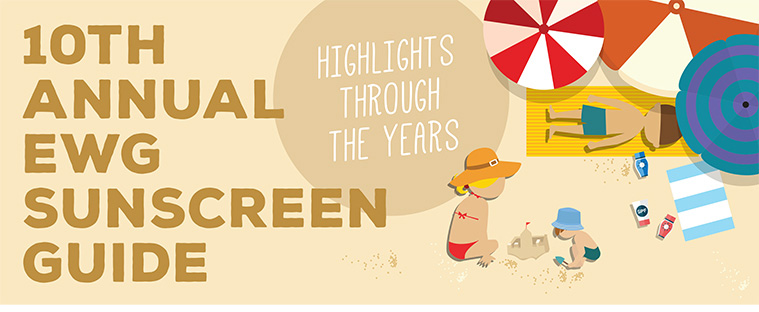
The Environmental Working Group annually studies hundreds of sunscreens on the market, looking at their ingredient lists and marketing claims. They've found that in the past 10 years, many products are safer, but there are still concerns over some products. And part of their guide looks specifically at children's formulas (best scoring and worst scoring), since children's skin is typically much more sensitive and their systems are still developing.

The EWG puts out an annual guide recommending the best sunscreens for both children and adults.


For an easy way to check products you're looking at, install the Environmental Working Group Healthy Living app. When you're out shopping, you can scan product barcodes to see how each ingredient rates on a health scale.


As I wrote about in my Alternative to Sunscreen post last year, chemicals from conventional sunscreens are not just harmful to our skin and bodies, they're extremely dangerous to the world's coral reefs. When my fiance and I visited Hawaii two years ago, we encountered many signs about the dangers of sunscreen to the native coral reefs, especially at Hanauma Bay State Park.

Gratuitous photo of Hanauma Bay, because, just look at it!

Coral feed on algae, and they provide a safe breeding ground for fish and other marine species. Coral reefs also protect shorelines against damage from storms and floods, acting as a buffer against erosion.

NOAA National Centers for Coastal Ocean Science researchers and their partners have discovered that BP-2, a sunscreen chemical commonly used in many soaps, cosmetics and fragrances, is highly toxic to corals. As of 2003, 27% of the world's coral reefs have been lost. By 2033, 60% could be destroyed.

Statistics show that approximately 4,000 to 6,000 tons of sunscreen are washed off in coral reef areas around the world every year. These ingredients bleach hard corals, even at extremely low concentrations:
  • Oxybenzone (BP-3)
  • Octyl methoxycinnamate (octinoxate)
  • Propylene glycol and Butylparaben
  • Camphor
  • Cinnamate
Look for sunscreens that don't contain these chemicals, or parabens (common preservatives that can lead to endocrine system disruption).

  • Just want a cheat sheet of the top brands? Lucky for you, it's a short 203-product list of brands that meet EWG's criteria!
  • Read their FAQs for all the information you need on sunscreen safety.
  • Shop the EWG's best-rated sunscreens through their Amazon-powered store.

Other Resources


Get sunscreen smart and grab a hat before you go outsideyour skin and body will thank you for it!
0

Eco Easter Activities

With just under two weeks until Easter, it's time to start thinking about stuffing baskets and planning egg hunts. However, cheap plastic eggs and neon basket grass do nothing to help the environment, so let's look at a few ways to make Easter greener!


Dyeing Easter eggs - naturally!

Maybe they're born with it, maybe it's turmeric! For a few years, I've experimented with using natural egg dyes, and it's been pretty successful! Check out last year's batch. It's a great way to use up older spices or make ingredients work double-time. Turmeric, paprika, pickled beets, and red onions are my favorite items to use with vinegar. Plus, it makes your kitchen smell great. Get the children involved and give them a fun, natural science experiment.

Get some more natural egg-decorating ideas from EcoWatch.

When it's time to dry your dyed eggs, try this easy trick from Sloane over at Sincerely, Sloane: Since your water and soft drink bottle caps aren't recyclable, hold on to a handful of them to use as egg stands. They are the perfect size and collect any drippings, so cleanup is much easier!


Egg hunt time

Take your beautifully and naturally dyed eggs and hide them just before the hunt is set to start. Once all the eggs have been found, peel and use them for an Easter dish. Potato salad? Always a winner. (And now I'm hungry.)

If you'd still prefer to use artificial eggs, or you are hiding them on a larger scale, you still have a better option! Eco Eggs is a company that makes plastic eggs from plant-based materials. They come in two sizes and are fillable, if you enjoy hiding treats and candy inside the eggs for the hunt. And the best part is, they aren't impossible to find. Amazon Prime those babies directly to your house. The company also makes eco-friendly Easter grass, made of recycled paper.

Onto baskets! 

First things first. Don't go for those prefilled baskets at the store that come with cheap toys and that are wrapped in cellophane. The quality is low and the waste is high. It doesn't take much to make your own, and then you can really customize it for your child!

If you already have Easter baskets, use them again. If you don't have a basket, ask around to see if a friend or relative might have one you can borrow. Look around online or in town for used baskets. Or simply look around your house and see what might double as a basket. Make one out of a gallon-size milk jug. Or use a pail, bucket or bin! (If you have a grown-up child, you can skip the basket altogether, because we really just want the goods anyway. This was my "basket" the year I asked for healthier items.)


Line the basket with eco-friendly Easter grass, or get to DIYing. Crinkle some kraft paper, or even shred some junk mail or scrap printer paper. Extra bonus points for using a small pile of Mardi Gras beads!

Now, to fill it with goodies. If you go with candy, choose healthier alternatives, whether fair-trade chocolate or healthier cookies. Go shopping at a health food store to get some ideas. There are many healthy children's snacks that make great basket stuffers. Throw in some fun creative items, like nontoxic markers and a coloring book. Or maybe even splurge and add a child-size reusable drink bottle!

Save any decorations, artificial eggs, and basket materials that you can use again year after year. I saved this basket from an Edible Arrangements and use it year after year to hold these plastic eggs that are probably 20 years old.


Interested in learning more about natural egg dyeing methods? You still have time to visit Vermilionville on Friday, March 18, and Friday, March 25 for some demonstrations! Tapclick those links to get to the Facebook event pages.

Remember that Easter is not one of the more materialistic holidays, so focus on reducing the amount of low-quality, single-use materials, and reusing what you do have. Make your events more about the activity than the items. Now it's time to plan the most epic egg hunt ever!
0

Back to School... Back to Realityyy

If you hear a giant, collective groan this week, it's probably the thousands of students (and teachers) heading back to school. If you hear another giant, collective groan, it's probably the rest of us remembering how crappy school-year commutes are.

Oh well, we can't avoid the inevitable! The new school year is upon us, and just in case you haven't stocked up on school supplies yet, now is the time to go green for school!

https://olioboard.com/items/263680-kids-bags-and-backpacks-kids-eco-friendly-recycle-symbol-backpack-recycle-eco-backpack

Save some money and a lot of resources by reusing where possible and buying environmentally friendly supplies - from paper, pencils/pens and binders to backpacks, lunchtime supplies and art supplies.


PAPER, NOTEBOOKS, FOLDERS AND BINDERS

Start your supply be reusing what you may already have! If you've got some clean paper or folders in good condition left over from last year, use them again instead of stashing away to buy new.

When shopping for looseleaf, notebooks or computer paper, choose recycled! Recycled notebooks and reams of computer paper are very common and easy-to-find.

Expert tip: There are two kinds of recycled content: 'pre-consumer' means the material was recycled within the plant (from scraps) before going out for retail purchase, and 'post-consumer' means the material was previously used by a consumer and deposited at a recycling facility, then used by the factory.

Need a traditional composition book for class? Be unique with a decomposition book! Made of recycled paper, printed with soy ink and not processed with chlorine, decomposition books are available in stores as well as online.

Teach your children to make the best use out of their paper supply. Get them in the habit of taking notes using both sides of the paper and recycling any paper they don't need anymore.

As a parent, recycle any take-home papers you don't need to keep or return.

Once you have the recycled paper, it's important to have something eco-friendly to store it in. Naked Binders are one brand of eco-friendly binders; made of FSC-certified recycled cardboard. Earth Binders are another brand made of recycled materials, and they sell pocket folders and index tabs.

Oxford makes EarthWise pocket folders as well, made with 100% post-consumer recycled fiber. AND they come in more colors than just brown!


WRITING

Pens and pencils made with recycled materials are becoming increasingly available. Some pencils are made of recycled newspaper and some are made with reforested wood.

Many pens are made with recycled and/or biodegradable materials. Papermate sells pens made of recycled and biodegradable materials. Their biodegradable pens actually write really well. They also partner with TerraCycle to upcycle pens you collect and donate. Pilot makes an ink pen made from water and soft drink bottles.

If your children are using ink pens (whether recycled or not), teach them to conserve ink by always recapping or retracting the pen when they aren't writing with it.

BACKPACKS

Backpacks are available in recycled PET (soft drink bottles). They may be available in more specialty-type shops, but are definitely available online. Prices vary, depending on the backpack. Recycled backpacks are as strong as regular backpacks as well.

Timbuk2 uses recycled PET fabric and even recycled foam padding left over from other products in their backpacks.
 
If your child is allowed to bring a lunch to school, do it the green way! Skip the paper bags in favor of insulated reusable lunch bags, stainless steel cases or bento box-type kits, put drinks in a reusable mug instead of single-use juice boxes, and place sandwiches and snacks in reusable bags.

ARTS & CRAFTS

Crayons, sidewalk chalk, modeling clay, paint, glue and colored pencils all come in nontoxic alternatives. Eco Kids is a company dedicated to providing eco-friendly, nontoxic art supplies. Stubby Pencil Studio sells soy-based crayons, drawing books made from recycled paper and scissors made with recycled plastics.


Because school supplies cover so many products, there are tons of options for anything you could want or need to buy. The brands mentioned are by far not the only ones who sell sustainable and environmentally friendly school and office supplies. When you're shopping for supplies, take the time to do a little research beforehand so you can figure out which brands to look for and where to find them. You'd be surprised how many options are available at your local office supply store.

And don't forget to take the opportunity to educate your children on how their supplies help the planet and why being eco-friendly is so important for planet and for people. If children make sustainability a habit at a younger age, they're much more likely to advocate for sustainability as they grow up!

0

green birthdays

It's easy to make birthdays a little greener, whether you are turning 5, 35, or 65. Parties don't have to have so much trash, and gifts can be eco-friendly and wrapped in recycled paper or bags.

This year was a good birthday for green gifts. I got a reusable shopping bag that folds into a grenade case, with the clever slogan War on Plastic. Milo has already enjoyed it more than me.


I also got this impossibly adorable recycled-paper notebook to attempt to keep myself organized. Spoiler alert: I may have picked it out myself, and they definitely have a variety of great covers. Made it hard to decide. The brand, Ecojot, is based out of Canada and they produce stationary items made with recycled paper and cardboard, vegetable inks and biodegradable shrink wrap. Even better, a portion of all proceeds are donated to their GIVE Program, to provide writing tools for children in need around the world to help them write their way out of poverty and violence. Now that's a birthday gift to feel good about!


(Bruno Mars also makes for a great birthday gift to yourself, just sayin'.)


Even got a bike ride in during my birthday weekend. A quick ride to and from brunch on a Sunday morning in New Orleans is always a happy time, even when it's 90 degrees and stupid humid outside.


Now, I'm sure most children would not be excited for grocery bags, Bruno Mars concerts and notebooks as birthday gifts, so I've got a few tips on how to green a child's birthday party while still keeping it fun!
 
Start with your invitations. Add some science and nature fun to your child's birthday invitations by mailing out seed paper invitations, such as these from Eco Party Time. Or choose invitations made from recycled paper. Or you could get creative and make your own recycled paper party invitations. It can be a fun activity with your child...until someone throws a crayon! If you truly don't want to use paper, use an online invitation such as Paperless Post, or go more low-key with a private Facebook event invite or mass message. (You know you've sent at least one at some point!)

Gifts, especially at children's birthday parties, always come with a ton of unnecessary trash. If you're determined to reduce your trash impact, include a line on the party invitation requesting that gifts be bagged, wrapped in plain paper, or even unwrapped. Gift bags have a longer lifespan than wrapping paper, and they are reusable (covering yourself for the next child's party your child has to attend!) Save all good tissue paper to use again. Another idea if you are the one giving a gift, whether to a child or another adult, is to use reusable shopping bags as the gift bag. This way, the gift bag is part of the gift itself! The bags can be used to hold toys in the car, and they come in amazingly handy on road trip vacations.

When planning the party decorations, skip the PVC and vinyl dollar store kind that won't last three hours. Use items you have already, or decorate with other eco-friendly decorations. Tables can be covered with brown kraft paper, which also gives children a coloring surface. The paper can be recycled once the party is over (unless it's covered in food or drink spills, then that will have to be thrown away). Recycled tissue paper formed into poofy flowers can be used for festive decorations. Save anything that's still in good shape once the party is over, and use again for future parties.

Kids and dishes are a bad combination, so I'm not even going to dare suggest using real plates for a party, no matter how green it is (and if you're an adult and having a party for yourself, use real plates! You're a grown-up, after all!) Melamine plates seem to be a good, inexpensive solution, but be careful not to microwave them! Look for sustainable or biodegradable disposable dinnerware, made from bamboo or other plant-based materials. Susty Party is my jam for eco-friendly party supplies, so check them out. They sell everything separately, but they also have really cute party packs that make your shopping go much faster.

Place clearly marked recycling bins throughout the party area, and especially next to the food. To make it a simple teaching experience for children, create picture signs of what's appropriate to throw in the recycling bin.

If you're a little older and more low-key, you've still got eco-friendly alternatives! Ask for eco-friendly, locally made or sold, or recycled material gifts from your loved ones. If you're looking for a gift to give, remember that many websites sell gift cards online, and they can be delivered paperlessly! Choose a locally owned restaurant, or a farm-to-table restaurant, and enjoy a delicious birthday dinner.

If you're having a get-together, class it up with real dinnerware and drinkware. Place recycling bins out for wine or beer bottles. Get creative with making wine glass markers, and use recycled cardboard or damaged gift wrap, with a marker to write guests' names. Broken or solo earrings can be taken off the hook, strung on some picture frame wire, and tied around wine glass stems for a creative way to use otherwise trash-bound items.

Birthdays shouldn't have to be a drain on resources and the environment. With a few adjustments, your birthday celebration can be both fun and eco-friendly!

For more green children's party ideas, visit Parents, PBS and Green Planet Parties!

0
Back to Top